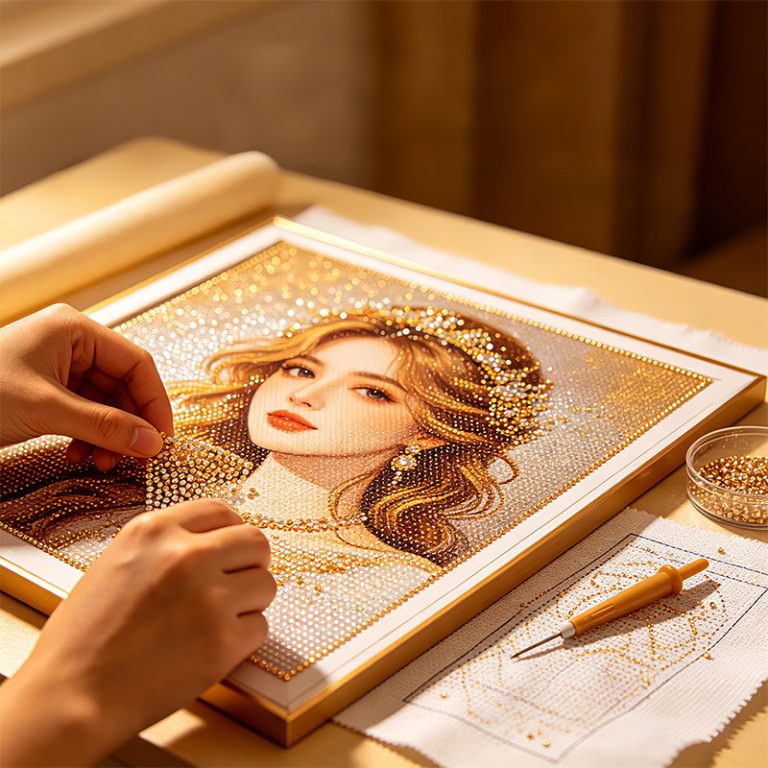
Diamond painting functions as a grid-based craft. Every single cell stands for one drill and a specific color. An ordinary print can show unlimited shades. However, the finished diamond work cannot reproduce details smaller than a single drill. A clear source picture provides the designer with highly useful information. Yet, the subject size and image contrast remain just as important. The planned canvas dimensions also matter just as much as the overall pixel count.
Think about a high-resolution family photo as an example. It might still fail if six faces take up only a tiny section of the frame. A basic pet portrait often works much better. This happens because the eyes, nose, and fur edges completely fill the image. You must judge the subject at the final chart scale. Do not look at it only on a small phone screen.
A written intake sheet makes the approval process much faster and significantly fairer. You should state the preferred standard clearly. Also, define the exact rejection point. This way, weak files get flagged before the charting step begins. As a result, replacement requests become very easy to explain to clients.
Always ask for the original JPG, PNG, TIFF, or another agreed production file. Do not accept a basic screenshot copied from social media platforms. You need a practical starting point. Therefore, request at least 2,000 pixels on the shorter edge for any single-subject design. Group scenes and large formats naturally benefit from extra image data. Actual pixel dimensions matter far more than a modified DPI label. Simply typing “300 DPI” into a tiny file will never restore the missing visual details.
You should reject heavy compression and any motion blur. Severe digital zoom and artificial sharpening halos are also unacceptable. Try to keep the original color profile whenever possible. You might plan to make a shaped product. In that case, request a clean PNG file. Then, carefully inspect the hair, fur, and narrow edges at a 100% zoom level.
The main face or central object must remain in sharp focus. It should be evenly lit and well separated from the background. You must avoid deep shadows across the eyes. Blown white areas and strong colored filters cause problems. Mixed indoor lighting is also a poor choice. These common defects can easily collapse several important tones into just one single drill color.
You might handle repeat corporate orders. For these projects, always include a reference file for the approved colors. Computer screens, printed canvas materials, and resin drills all reflect light differently. Therefore, you should approve the mapped chart and a physical sample. Do not expect an exact screen-to-drill color match.
You must set a safe area around faces, paws, hands, logos, and text. Do not crop the picture at physical joints. Also, never place a key detail directly against the edge. The subject should normally fill most of the frame during portrait projects. Busy rooms, large crowds, and distant scenery merely add extra colors. They do not add any useful meaning to the final piece.
Always confirm the permission to reproduce the image, artwork, logo, or personal likeness. This step is especially vital for retail and promotional orders. You need to keep a clear file name and a version number. Maintain a detailed approval record as well. This careful tracking ensures that the correct crop reaches the production team.
The photo will eventually pass the intake stage. After that, the buyer must connect its specific detail level to the actual physical kit. The canvas size, drill shape, coverage area, and special effects change the visual appearance. They also alter the overall user experience. This specific step is where an attractive digital proof becomes a real product. It ensures that customers can actually complete the craft. Furthermore, it gives wholesale diamond painting kits a very clear specification. This standard can then be repeated accurately across future orders.
Larger canvases naturally provide more grid cells. These extra cells help define facial features, color gradients, and separate subjects. Our custom photo diamond art is offered from 30 × 30 cm to 120 × 150 cm. This broad range gives buyers ample room to match the format to the image complexity. A close couple portrait may perfectly suit a compact square. On the other hand, a large family group needs considerably more space.
Full-drill designs completely cover the image with drills. They create a highly consistent sparkling surface for keepsakes, wall art, and special gifts. Larger sizes also raise the total drill count and the required completion time. They increase the package weight and the final freight cost too. You should approve the smallest size that still keeps the key visual forms readable.
Round drills are generally much easier for beginners to place on the canvas. They leave small gaps that can make the finished surface look brighter. Square drills create a much tighter mosaic and produce sharper edges. However, achieving neat alignment with them calls for extra care. ZOOYA Diamond supplies 2.8 mm round resin drills and 2.5 mm square resin drills in its custom portrait kits.
AB or Fairy Dust accents can beautifully highlight jewelry, stars, water, or celebration details. You must use them selectively. This caution ensures that faces remain even and the main focal point stays perfectly clear. You should record the specific drill type and the chosen effect colors. Also, note the coverage area and the replacement allowance in your final purchase specification.
Great photo quality cannot compensate for weak physical materials. You need to check the canvas density and the print legibility. Verify the adhesive consistency, symbol contrast, drill sorting, and bag labels during the sampling phase. The printed legend must remain completely readable under normal craft lighting conditions.
At ZOOYA Diamond, our personalized kits use clear printed symbol guides and premium resin drills. These elements turn approved photographs into engaging hands-on craft projects. Buyers can review the broader customized photo and DIY diamond range before choosing a final format. Many projects involve complex multi-color work. For these tasks, a wooden drill storage box can greatly help users separate their round, square, and effect drills.
You should never approve the same photograph blindly for every sales channel. Recent market demand strongly favors personal stories and smaller test runs. Customers also love pet keepsakes, elegant wedding gifts, and compact display pieces that fit nicely on desks or shelves. Social-commerce sellers are currently testing personalized products in shorter production runs. They do this before launching a full seasonal range. Therefore, each distinct application needs its own specific crop and difficulty level. It also requires tailored packaging and unique review criteria.
Don’t ship a large order off of the source image alone. First approve the exact crop and aspect ratio that it will be printed at. Next approve the design at the true grid size of the finished production, approve a physical sample of the materials that will be used in production. This sample must be a true representation of the approved production specifications.
A signed checklist covering all of the points above should be used.
An independent check on the physical artwork should be done by someone who was not involved in the production of the artwork. View the artwork from both near to and far from the point of viewing that it will be displayed from. Take a photo of the approved artwork under test lighting and retain a copy of this photo with the official order form. Any subsequent changes to the design should be produced as a completely new version of the artwork and not as a series of amendments to previous text messages etc.
There are many aspects that must be well controlled for producing high quality products for bulk custom diamond painting. First, the photo gate must be well disciplined. The buyer should always ask for the original and focused image file. The main subject must be protected sufficiently by appropriate cropping. The complexity of the image must correspond to the size of the canvas, the type of the drill, and the skill of the end user. In addition to the digital control of the materials, physical material checks for clear symbols, stable adhesive, sorted colors and suitable accessories for the makers are essential. Current trends of personalized gifts offer big business opportunities. These are among others pet portrairts, wedding gifts, memorial pieces, corporate gifts and small art pieces for display in homes and offices. Each market however has its own specific approval processes. A detailed chart proof and a physical sample of the representative product is the best basis for releasing production. These rules must be clearly written into the initial offer and signed off before mass production is started. This way the buyer gets much more consistent kits than without these rules.
A: You should start with at least 2,000 pixels on the shorter side. After that, carefully assess the actual subject size and the image focus.
A: Round drills are usually much easier for users to place. In contrast, square drills create a significantly tighter mosaic finish.
A: Yes, they absolutely must. You should approve the digital chart and one representative physical sample. Do this before releasing the final bulk order.